To tell if a used car has flood damage, pull a vehicle history report, then hunt for physical traces: a musty smell, water lines on trim, dried mud in crevices, and rust on metal that should not rust. Check the paperwork, the cabin, the engine bay, the electronics and the test drive before you sign anything.
Here is the part most buyers get wrong. Water damage is not always visible at the lot, and the damage often shows up months later, not on the day you hand over the money. Corrosion eats wiring harnesses, control modules, airbag sensors and brake lines slowly, so a car can start, shift and drive perfectly while quietly falling apart underneath.
Dealers detail and recondition cars before they go on the lot, which removes the very evidence you are supposed to look for. So the process is not one magic trick. It is a sequence, and the history report only handles the first part of it.
This guide walks through that sequence in order, with a time estimate for each stage so you know how deep to go depending on where you are in the shopping process. Everything here is general guidance for US buyers; your state’s disclosure rules and title branding thresholds vary, so check what applies where you live.
Table of Contents
- 1What You Need Before You Inspect the Car
- 2How to Tell If a Used Car Has Flood Damage, Step by Step
- 31. Check the history and title records first
- 42. Inspect the exterior for water and sediment marks
- 53. Look inside for dampness, odors, and stains
- 64. Check the engine bay and underside, where the traces hide best
- 75. Test the electronics and vehicle systems
- 86. Test-drive the car and ask the seller direct questions
- 9Warning Signs by Area
- 10Common Mistakes That Make Buyers Miss Flood Damage
- 11Frequently Asked Questions
- 12Does Carfax show flood damage, and can a clean report still mean a flooded car?
- 13Where does hidden water damage usually hide inside a car?
- 14What should I test during a test drive to check for flood damage?
- 15Do car dealers have to disclose flood damage, and what can I do if they do not?
- 16Can a flood-damaged car be repaired, and is one ever worth buying?
- 17Conclusion: What to Do First
What You Need Before You Inspect the Car
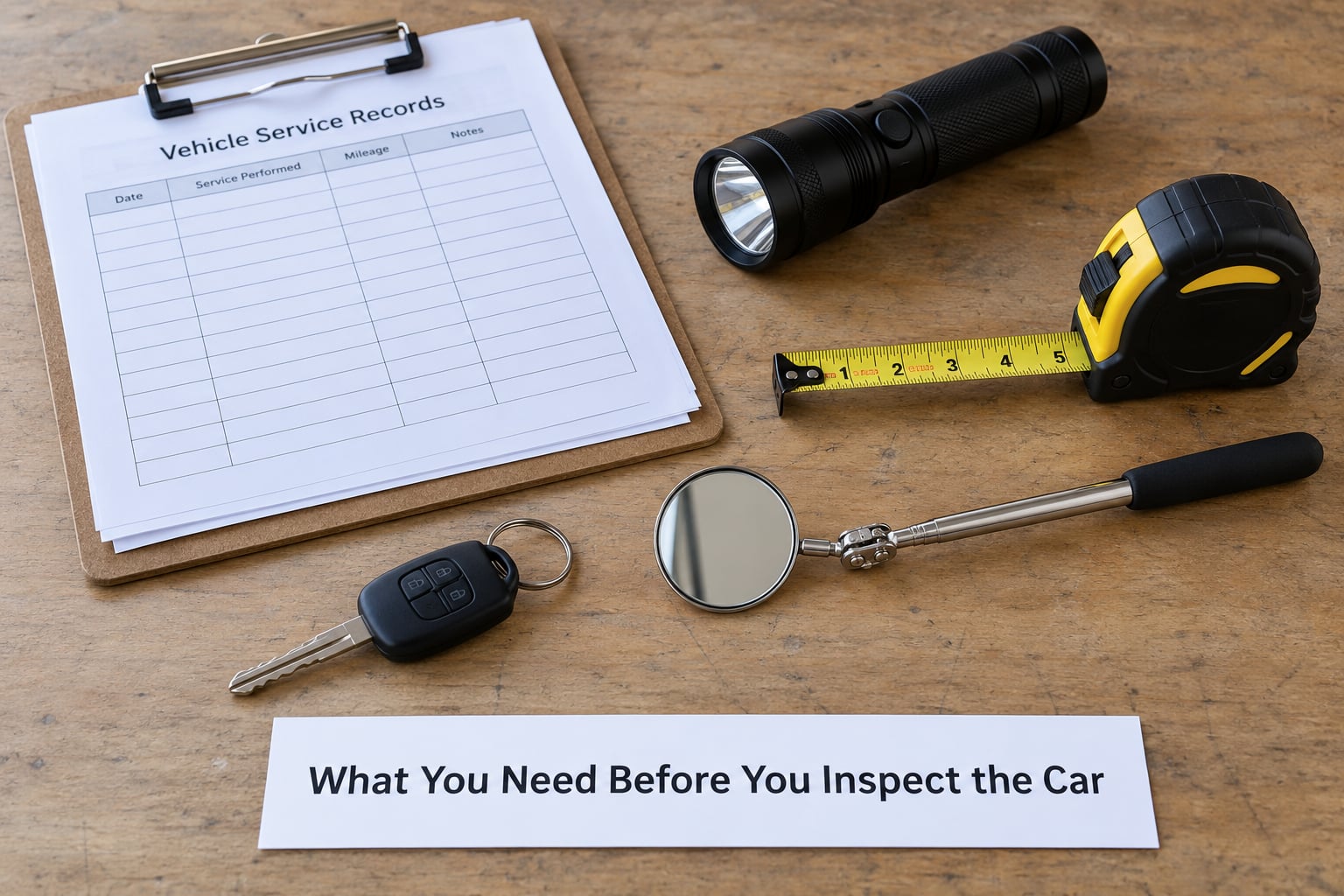
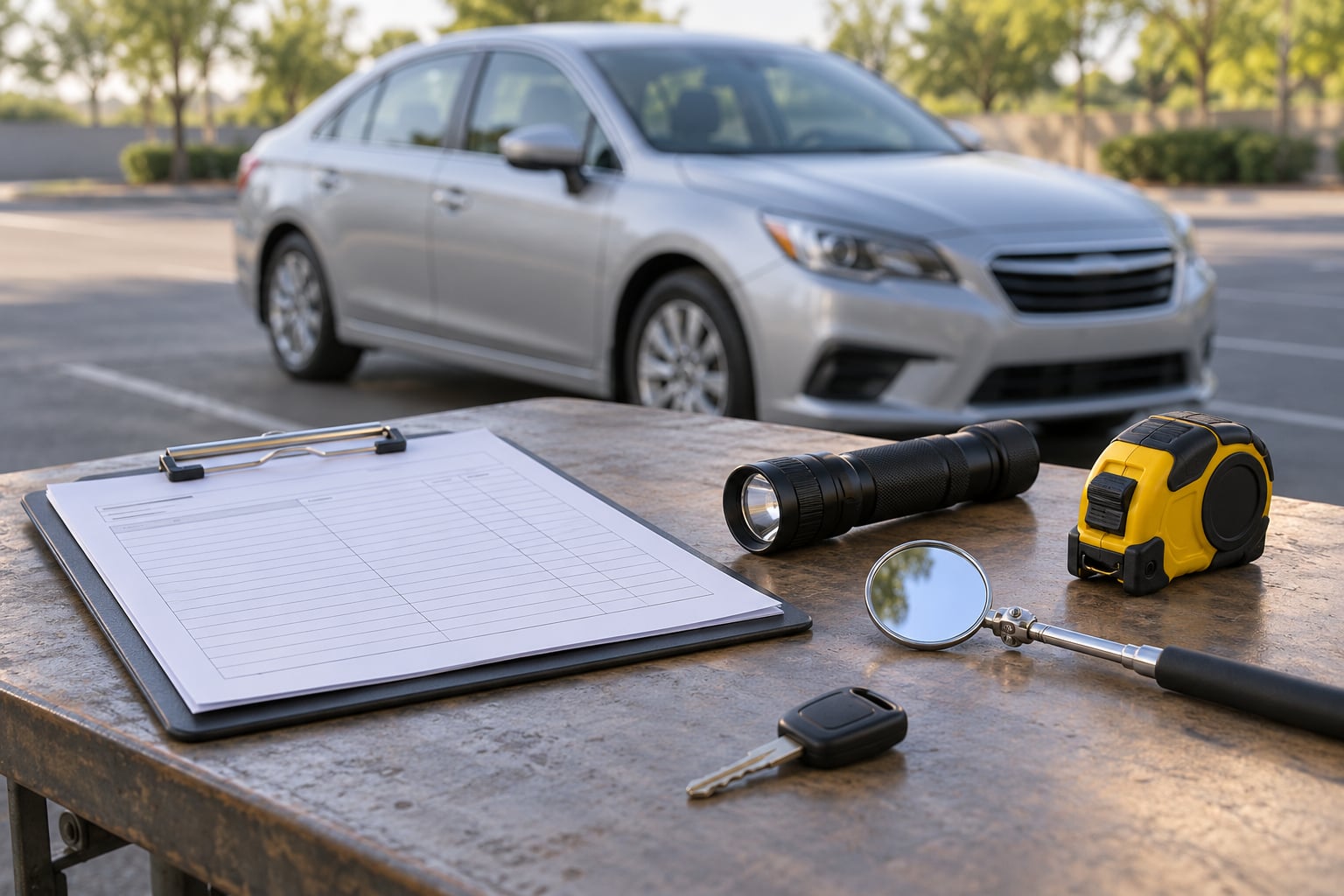
A flashlight, a small inspection mirror and your phone are enough for a first look. Add a paper towel and a pair of gloves, and you can cover the whole walk-around in about ten minutes.
- The VIN. Read it from the dashboard plate behind the windshield and from the door jamb sticker. They must match each other and match the paperwork.
- History report access. CARFAX, Experian AutoCheck, the NICB VINCheck service, and a free NMVTIS-approved report through a DMV or an approved provider.
- A flashlight and an inspection mirror. The mirror gets you under the dash, behind the seats and into the trunk well.
- A paper towel. Dipstick checks and damp carpet checks both work better with something to wipe on.
- Your phone. For photos of every odd sign, including the VIN plate and any paperwork, before you leave.
- A mechanic’s name. An independent pre-purchase inspection is the step most people skip and most regret skipping.
Bring the service records if the seller has them. A stack of recent invoices showing no engine work, no cooling system work and no interior repairs on a car with high mileage tells you something on its own.
How to Tell If a Used Car Has Flood Damage, Step by Step
The order matters. Start with the cheapest checks that can end the conversation, then move to the physical ones that cost you time instead of money. Below is the same sequence, broken into the six steps that matter most.
1. Check the history and title records first
Run the VIN before you look at anything else. A history report is the fastest way to end a search, and it takes about five minutes from your phone.
Start with the title itself, which you should read in person. A flood-damaged vehicle in most states carries a branded title: flood, salvage, or rebuilt. A rebuilt title means the insurer declared it a total loss, an insurer and a licensed rebuilder handled it, and it was repaired and put back on the road. Clean means no brand at all.
A low-water or partial flood designation is a separate category in some states. It generally means the water reached the vehicle but did not submerge the entire car. Do not treat it as harmless. It still means water got into the body, and the resale hit follows the car for life.
Then pull the history report and look for four things: a total loss or salvage record, an insurance claim date that lines up with a flood, a registration address in a flood area during a storm, and title changes in a short window. A VIN that shows a title in a coastal county one month and a landlocked county the next, with no move in between, is a classic title-washing pattern.
Why a clean title is not proof: flooding is not always a total loss, so no claim gets filed and no brand gets attached. Buyers far from the coast are the most exposed, because the car was already moved out of the storm zone before anyone thought to check.
Do the paperwork check properly by matching three VINs together: the dashboard plate, the door jamb sticker and the title. A mismatch is not a clerical error, and there is no version of buying that car where a mismatch is fine.
2. Inspect the exterior for water and sediment marks
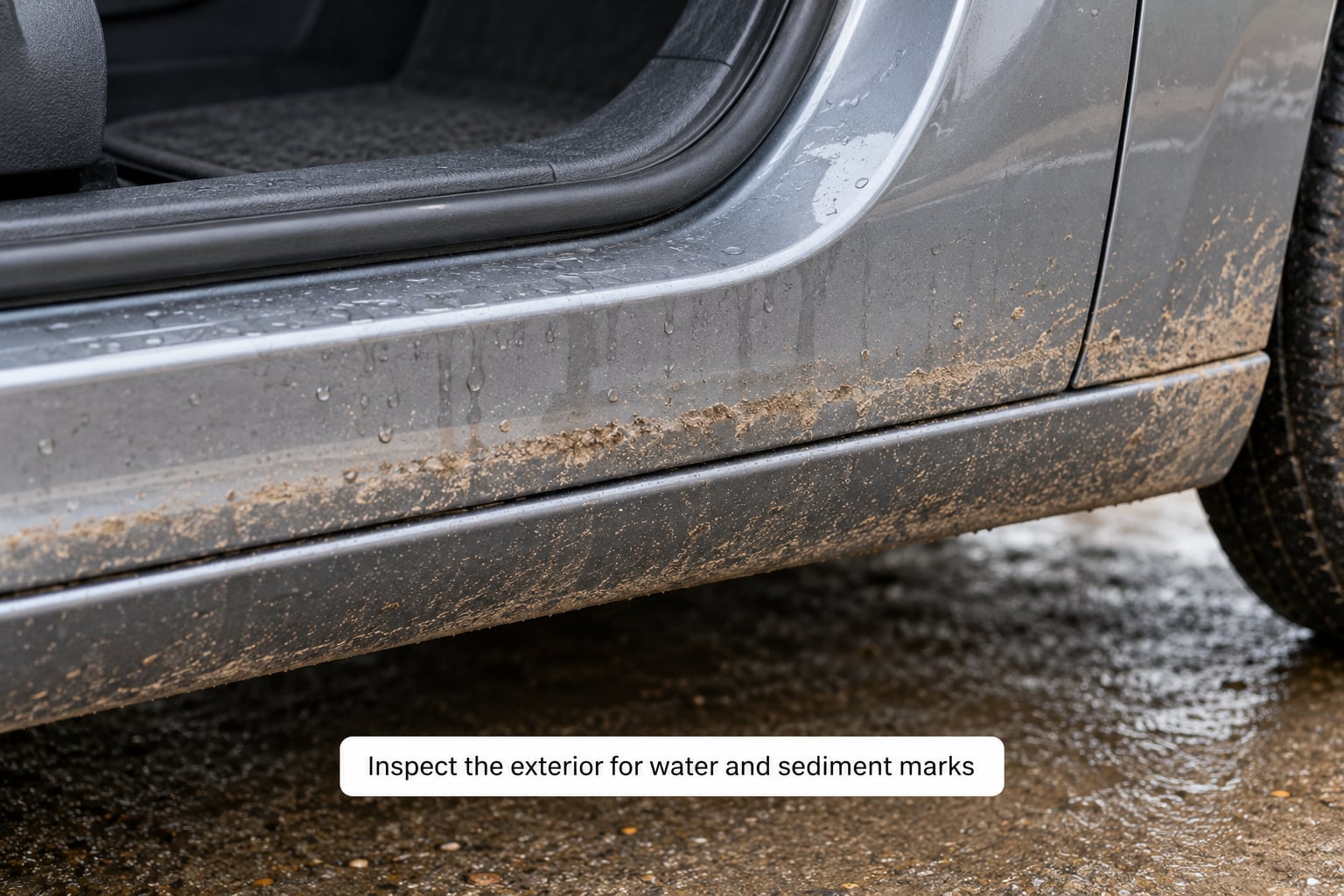
Water leaves a horizontal line, and that line does not care how thorough a detailer was. Look for a faint tide mark on the door jambs, the door sills, the hatch opening or the trunk lip.
Crack the door seals and look at the metal underneath. Then run your fingernail along the trim clips. Dried mud packs into the crevices around the hood hinge, the cowl, the trunk hinge and the spare tire well, and it survives a wash even when the paint looks perfect.
Compare the two sides of the car under direct sunlight, not in a shaded lot. Fresh paint on one door only, one mirror only or one fender only is a repair, and repairs near a flood often mean the car came apart at some point.
Fresh undercoating or a heavy oil film sprayed across the undercarriage is worth asking about. It is sometimes a legitimate rust treatment, and it is sometimes a way to cover a wet underbody. Put the question to the seller directly.
Look up under the dash by the pedals. That metal is usually bare and unprotected, so rust or mud there is one of the most consistent physical tells there is, and it is easy to miss because it is out of plain sight in both a dealer car and a private sale.
3. Look inside for dampness, odors, and stains
A damp carpet, a musty smell or water staining tells you more than a clean report does. Do the smell test before anything else, and do it honestly.
Ask the seller to turn off any air freshener, open a door for a few seconds, then close it and sit in the cabin. Better yet, park it in the sun with the windows up for ten minutes and step in. Odor molecules that were being masked by a hanging tree will surface the moment the deodorizer is off.
Then pull the seatbelts all the way out. Look for a distinct residue or a water line mark at the end of the webbing and on the retractors. This is a cheap trick that costs nothing and is shared constantly among owners for a good reason, because retractors sit low and trap water and silt.
Check the cabin for these specific signs:
- Carpet that is damp, stiff or gritty under the mat, especially at the edges where the padding holds water.
- Carpet or upholstery that does not match the rest of the interior in color, texture or wear. New carpet on an otherwise tired cabin is a signal on its own.
- Seat mounting bolts with bright, unpainted heads while the bolts around them are rusty or painted over.
- Water lines on the door panels or a discoloration band along the top of the dash.
- Peeling or swollen interior paint, and trim pieces that sit proud or have gaps that were not factory.
- Silt or grit in the trunk and spare tire well, which most people wipe once and never check again.
- Stains on the headliner and around the sunroof drain tracks, which is where a ceiling leak or a flood leaves its mark.
- Musty or damp carpet padding, which is the padding you cannot see and cannot dry without pulling the carpet back.
Squeeze the carpet padding through the mat. If it feels cold, heavy or spongy rather than dry and uniform, water got in there and never fully left.
4. Check the engine bay and underside, where the traces hide best
The engine bay is where a car that was pulled apart and reassembled gives itself away. Look for evidence that the vehicle was disassembled after the water event, and check the fluids while you are there.
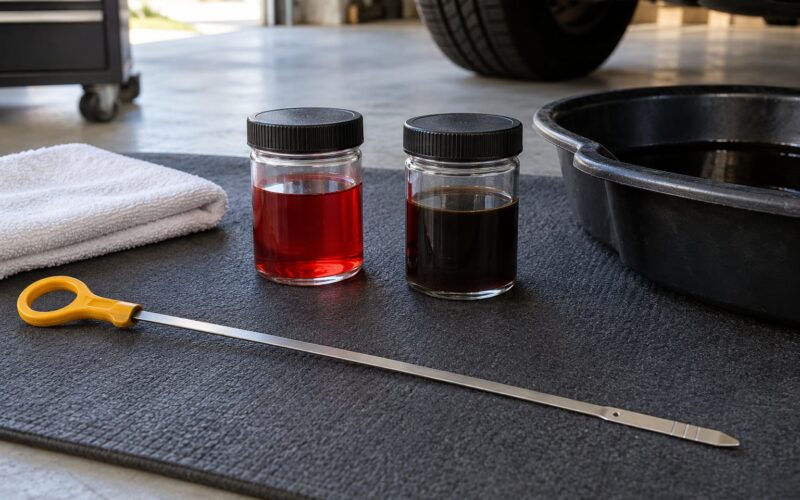
Pull the engine oil dipstick and wipe it, then pull it again. Freshwater flood damage often shows up as a milky residue on the dipstick or on the filler neck, and it will not have the mileage to explain. Condensation in a used engine can be confused with this, so warm the engine first and re-check before you panic.
Open the coolant reservoir and look at the fluid. It should be clear, clean and the right color, with no oily film floating on top. A cloudy or film-coated coolant, or a residue ring on the inside of the cap, points to contamination or a replaced radiator that nobody documented.
Check the power steering fluid and the brake fluid. Both containers are translucent, so you can see the color without a test strip, and both go cloudy or milky when water gets in. On a flooded car these are often among the first fluids to fail.
Now use the flashlight and mirror on the underside. Look for dried mud in crevices and on crossmembers, a fresh or oversprayed undercoating, silt in openings, and greenish or white corrosion on connectors and terminals. Also check that the battery is not obviously newer than the rest of the car.
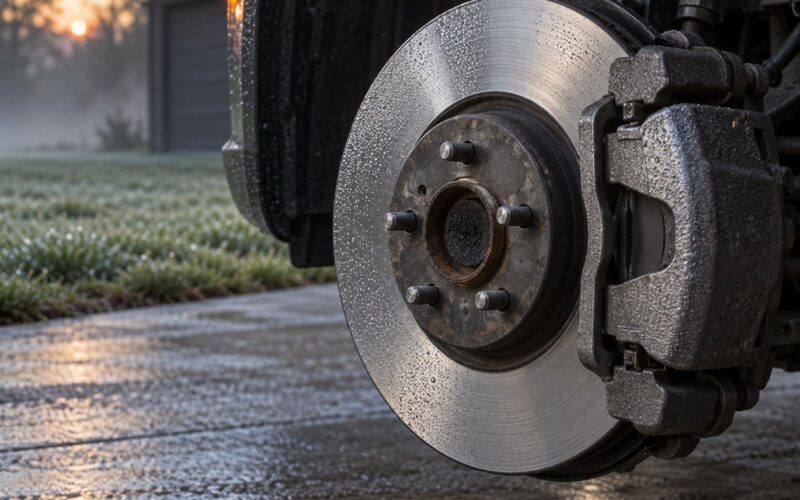
Here is the false-positive warning. Cars that live near the ocean get surface rust on rockers, springs and exhaust from salt air, and a car that has driven through a winter road treatment can look similar. Light uniform surface rust on an exposed underbody is normal. Rust bloom on bare metal that had no protection, corrosion on wiring connectors, and mud packed into structural crevices are not.
Do not confuse a cold start with a problem. A hard first start after the car has sat is common, even normal, on an older vehicle.
5. Test the electronics and vehicle systems
Water does its worst work in electronics, quietly, and months after the flood. Test every system while you watch for faults that only appear sometimes.
Test the basics one at a time: both windows up and down, all four door locks, every light inside and outside, the horn, the wipers and washers, the power mirrors, the seats and the heated steering wheel if it has one. Turn the climate control through every setting, including the rear defrost, and listen for a blower that changes pitch or a fan that runs unevenly.
Cycle through every screen and menu on the infotainment system. Look for a display that flickers, a backup camera that goes black, or a touchscreen that needs a second or third press to register.
Check every light housing for condensation. Water gets in through the seal behind the lens, and clear fluid inside a headlight or taillight housing means the housing was never dried or resealed. Fogging on the inside of a headlight lens is a much stronger signal than a little mist, so look at it in the shade rather than in direct sun.
Then check for a warning light that stays on, or one that flickers over bumps. An airbag or restraint system light is a serious flag: seatbelt sensors and crash sensors live low in the vehicle, and they are among the first components to fail after submersion.
Intermittent faults are the ones to respect. If a window needs three pulls, or a lock works only with the door open, note the exact behavior and tell the mechanic. A fault that does not reproduce on demand is usually a corroded connector, and corrosion does not get better with time.
6. Test-drive the car and ask the seller direct questions
The test drive is where you check whether the car runs the way a healthy one runs. Listen more than you look.
At start-up, note hesitation, a rough idle, a shudder, a warning chime or a long crank. Accelerate gently through the full range and listen for hesitation, knocking, slipping or a transmission flare that changes as the car warms up. A vehicle with water in the cooling system often runs fine cold and complains once it reaches temperature.
Watch the temperature gauge climb unusually fast, and check for an odor of burnt coolant or hot metal. Any warning light during the drive ends the evaluation, not the negotiation.
Then ask, plainly and without accusing anyone: Has this vehicle ever been in water or flooded? Has there ever been an insurance claim? Have the interior, engine bay or undercarriage ever been repaired or disassembled? Was it ever registered out of state, and why? Has the VIN ever been verified, and do you have the records?
Pay attention to the answer’s shape. A definite no, backed by service records and a clean report, is reasonable. A vague answer, a story about storm water on the highway that never touched the vehicle, or a refusal to let you check the spare tire well are all answers in themselves.
Before you commit, have an independent mechanic inspect the car and tell them what you have already found. An inspection commonly costs a few hundred dollars depending on your area and the vehicle, and it is the cheapest insurance in the whole process. The mechanic can put the car on a lift, pull codes, check fluids and underbody corrosion, and scope wiring connectors in a way you cannot from the driver’s seat.
Finally, verify the paperwork independently. Contact the DMV or your state motor vehicle agency with the VIN and ask whether it is currently branded, and use an NMVTIS-approved source for a vehicle history report. After you buy, pull a fresh report rather than relying on the one you saw. Flood advisories can be added to a report later, so a clean report this month is not a guarantee for next month.
Warning Signs by Area
Use this as a scan list when you walk around a car. No single sign proves submersion, but several of them in the same area are very hard to explain any other way.
- History report — total loss, salvage, flood or rebuilt branding, a flood-area registration date, or a rapid title change between distant states. Why it matters: this is the only sign that cannot be hidden with a wax and a detailer.
- Cabin odor — musty, damp or mildew smell once the air freshener is off. Why it matters: mold in carpet padding and foam rarely goes away with surface cleaning.
- Seatbelts — a water line or residue at the end of the webbing, or gritty retractors. Why it matters: retractors sit low in the cabin and trap water and silt.
- Door jambs and sills — a horizontal tide mark, a tide line on the door seal, discoloration on the jamb metal. Why it matters: water reaches a consistent height, and the line stays after drying.
- Engine bay crevices — dried mud or silt in the cowl, hinge areas and body seams. Why it matters: nobody pressure-washes inside a hinge, and a car can be detailed on the outside only.
- Under the dash by the pedals — rust or mud on bare metal. Why it matters: that metal has no coating, so it corrodes or stains in a way nothing else does.
- Fluids — milky residue on the dipstick or filler neck, cloudy coolant, cloudy power steering or brake fluid. Why it matters: water is in the system, and coolant mixture is now unreliable.
- Light housings — water pooled or fogged inside a headlight or taillight lens. Why it matters: the housing was never dried, and it means water was standing in the body.
- Interior condition — mismatched carpet or upholstery, bright unpainted seat bolts, swollen or peeling trim, stains on the headliner. Why it matters: a rushed or partial interior repair is a flood signature.
- Undercarriage — fresh or heavy undercoating, silt in openings, corrosion on connectors, a battery newer than the car. Why it matters: it means someone either cleaned the evidence or replaced parts without telling you.
Common Mistakes That Make Buyers Miss Flood Damage
Relying on a clean title is the most expensive mistake. Flooding is not always a total loss, so no claim means no brand, and title washing exists precisely because a clean report sells cars. Treat the report as step one, never as the verdict.
Trusting a report you did not run yourself is a close second. Look at the seller’s printout at a distance, where details vanish. A report with a flood advisory logged days after the sale looks identical to a clean one at a glance.
Testing only in a freshly detailed dealer car is the third. A shampooed cabin with a new air freshener tells you very little. Ask for the odor test, and do it yourself rather than trusting a description.
Skipping the cold start is the fourth. A warm engine hides hard starts, running rough and cooling complaints. Ask to see the car started from rest.
Confusing normal wear with flood damage cuts both ways. A sun-faded driver seat, faded paint and surface rust on a rock panel are ordinary on an older car in a salty climate, and treating every speck of rust as proof of flooding makes buyers walk away from good cars. The tells that matter are on bare metal, in crevices, in connectors, and in combination.
Buying without an independent inspection is the fifth and the most expensive. A mechanic on a lift sees the underbody, the cooling system and the wiring that a lot visit never exposes. Skipping it to save a few hundred dollars is how buyers end up with a transmission rebuild and a dashboard full of modules.
Signing before the report is pulled is the sixth. Once you sign, most of your leverage is gone. Slowing down by one hour costs almost nothing compared with owning a car with a history you cannot undo.
Frequently Asked Questions
Does Carfax show flood damage, and can a clean report still mean a flooded car?
A history report often shows a total loss, salvage or flood record, a claim date and a registration in a flood area at the time of a storm, but it regularly misses damage that was too minor for an insurance claim. That is the real gap: a car can be half submerged, repaired privately and titled clean, with no report entry at all. Pull CARFAX, AutoCheck, NICB VINCheck and a free NMVTIS-approved report, and remember that flood advisories can be added months later, so re-pull the report before you finalize.
Where does hidden water damage usually hide inside a car?
The four hiding places worth checking every time are under the dash by the pedals, where bare metal rusts or stains; under the carpet padding, which stays damp long after the surface dries; inside the seatbelt retractors and along the full length of the webbing; and in the trunk and spare tire well, which most people wipe once and never reopen. Also check the headliner, the door jambs, the sunroof drain tracks and the light housings, where standing water fogs the inside of the lens.
What should I test during a test drive to check for flood damage?
Listen more than you look. Note the cold start, the idle quality and any hesitation as you accelerate gently through the full range. Then watch for a fast-climbing temperature gauge, a shudder, a transmission flare that changes once the car is warm, a warning light that stays on or flickers over bumps, and an odor of burnt coolant or hot metal. Any warning light during the drive ends the evaluation rather than the negotiation, and any code should be read before the car is driven further.
Do car dealers have to disclose flood damage, and what can I do if they do not?
In many states a dealer must disclose a vehicle’s branded status, including flood or salvage history, in writing on the paperwork, and federal rules prohibit misrepresenting a vehicle’s history. Exact thresholds and requirements vary by state, so check yours directly. If a dealer sells a flooded car as clean, keep the paperwork and dated photos, request the written disclosure, and report it to your state DMV, consumer protection agency and the Federal Trade Commission. Private-party sales are usually as-is, so the inspection matters more there.
Can a flood-damaged car be repaired, and is one ever worth buying?
Yes, and the outcome depends almost entirely on how deep the water went and whether it was salt water. Freshwater that stayed below the seats is a different car from one submerged to the dashboard, and salt water corrodes connectors and control modules far faster, sometimes for years afterward. A disclosed flood car priced well below comparable clean-title vehicles can be a reasonable buy for a buyer who understands the risk and budgets for future repair, but the discount should exceed the likely cost, not just sound generous.
Conclusion: What to Do First
Start with the VIN and the title, because that check is free and can end the search in five minutes. Read the brand, run CARFAX, AutoCheck, NICB VINCheck and a free NMVTIS-approved report, and confirm the dashboard, door jamb and title VINs all match.
Then work the car physically, in the order above: exterior water lines and mud, interior odor and mismatched parts, the engine bay and underbody including the fluids, and every electrical system. Put it on a test drive from cold and watch the temperature gauge.
Finish with an independent pre-purchase inspection by a mechanic you choose, and re-pull the history report the day you finalize. If you find water lines, silt in the spare tire well, rust under the dash and cloudy fluids in the same car, walk away. If you already bought, get it evaluated by an independent mechanic, document everything, and check your recall and return options before paying for repairs you did not plan on.
One caveat worth repeating: how to tell if a used car has flood damage is a question with no perfect test, because the best evidence is a documented history plus a clean physical inspection. Do both, and you will know more than most sellers do.