Sun damage is the slow photo-oxidation of your clear coat, and the counter is mostly parking and washing habit rather than a magic product. Learning how to protect car paint from sun damage comes down to three things: cut the UV exposure, rinse grit away before anything touches the panels, and add one sacrificial layer that takes the beating instead of your paint. Total time: an afternoon to set up, a few minutes a week to maintain.
Ten minutes in the sun means nothing. Eight hours a day, five days a week, for a decade is what changes a car, and that is why the accumulation matters more than any single hot afternoon.
Table of Contents
- 1What You Need
- 2How to Protect Car Paint from Sun Damage Step by Step
- 31. Inspect the Finish Before You Add Protection
- 42. Wash With a Method That Avoids Abrasion
- 53. Dry Thoroughly Without Creating Fine Scratches
- 64. Park in Shade Whenever Practical
- 75. Choose Wax, Sealant, or Ceramic Coating for Your Needs
- 86. Apply Product to a Cool, Clean Panel
- 97. Maintain the Protection and Act on Contamination Quickly
- 10Common Mistakes
- 11Frequently Asked Questions
- 12Does sunlight damage car paint permanently?
- 13Is wax or ceramic coating better for sun protection?
- 14How often should I wash a car in hot, sunny weather?
- 15Does a car cover protect paint from the sun?
- 16Do dark-colored cars need more sun protection?
- 17When should faded or oxidized car paint be repaired professionally?
- 18Protect Your Paint Starting Today
What You Need
Nothing here is mandatory, and the most effective item on the list is a shaded parking spot, which is free. Everything else is a small addition once your washing and parking habits are already solid.
- Inspecting light: a bright LED work light or flashlight helps you judge gloss and oxidation before you start.
- pH-neutral car shampoo: a soap made for automotive paint, not a household dish or laundry detergent.
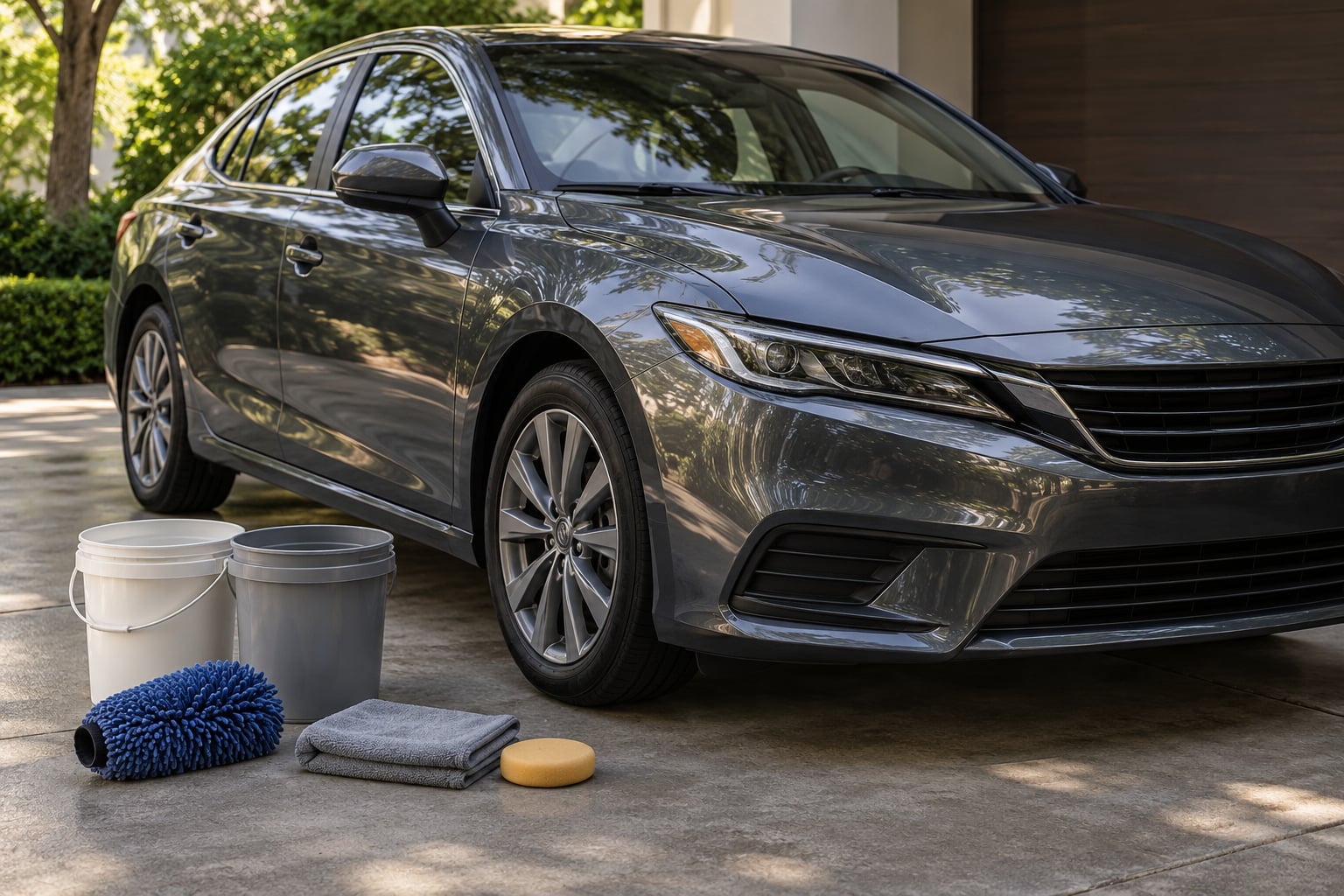
- Two buckets and grit guards: one bucket for shampoo, one for clean rinse water, each with a grit guard sitting in the bottom.
- Microfiber wash mitt and towels: clean, dry, and kept in separate buckets so grit never gets dragged across the clear coat.
- Drying airflow: a blower or a drying towel used before water evaporates and leaves mineral spots.
- One protection product: a wax, a paint sealant, or a ceramic coating, plus a foam applicator pad and a clean removal towel.
- Clay bar and lubricant (optional): only if the panel feels gritty after a wash and you plan to apply a coating.
How to Protect Car Paint from Sun Damage Step by Step
1. Inspect the Finish Before You Add Protection
Look at the car in daylight but out of direct glare, ideally under a garage or open shade, with a light raking across the panel. Direct overhead sun flatters everything and hides what you are trying to see.
- Dust and film: wipes off with a damp cloth, no residue. Not a paint problem.
- Water spots: faint rings with a hard edge, often worse on a hood or roof where droplets bake. Usually correctable with polish.
- Fading: the color looks flat and muted, most obvious on a dark panel that once had depth. The pigment, not just the gloss, is going.
- Oxidation: a chalky haze, like the panel was left in the sun for years. It feels rough to the touch and no amount of washing removes it.
- Clear coat failure: micro-cracks, whitening, or flaking patches, often on horizontal surfaces that took the most sun. This is body-shop territory.
Fading and light oxidation can often be improved cosmetically. Peeling or deeply chalked clear coat cannot, and no wax or coating will change that.
2. Wash With a Method That Avoids Abrasion
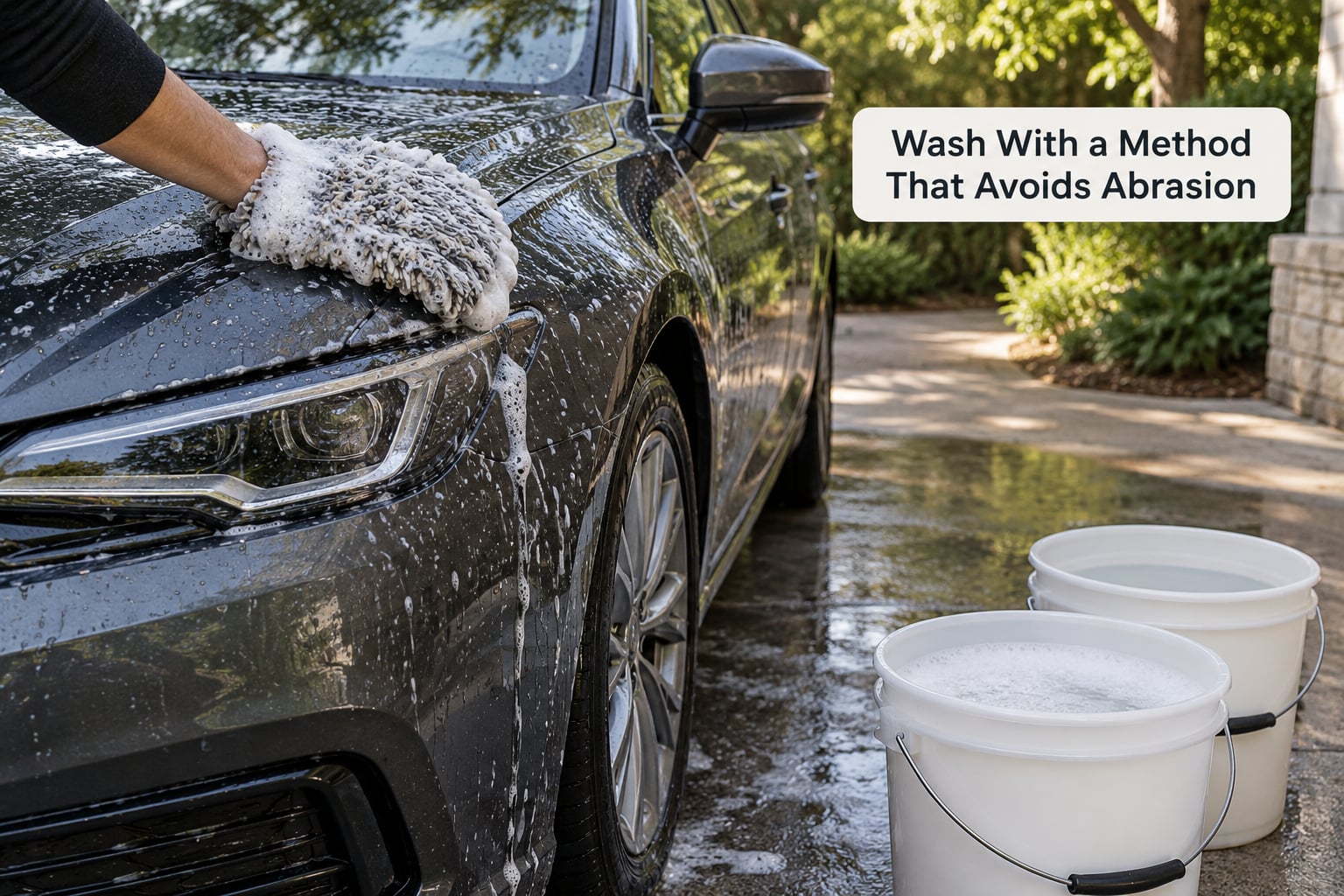
The single biggest source of swirl marks is moving a mitt across dust and grit that has been sitting in the sun all afternoon. Rinse the panel thoroughly with a hose before the mitt ever touches it, then wash from the top down so dirt falls away from cleaner sections.
Fill the rinse bucket first, add the shampoo to the second bucket, and drop a grit guard in each. Swap mitt faces often, and if the mitt drags or feels gritty, rinse and flip it rather than pushing harder.
Stay away from brushes with stiff bristles, dish sponges, and old bath towels. Household detergents and automatic car washes with spinning brushes are the two usual reasons a once-glossy panel looks hazed.
3. Dry Thoroughly Without Creating Fine Scratches
Work while the panel is still wet. Blot with a clean microfiber towel using light pressure, then hit the remaining water with airflow from a blower or a hair dryer on cool, kept a foot or more away.
Droplets that sit on hot paint do not simply dry. The minerals in the water bake into the clear and leave spots that take a polish to remove, which is why a sunny wash followed by a slow hand-dry is worse than a cool one followed by airflow.
4. Park in Shade Whenever Practical
A garage is the strongest protection available, because it removes the exposure instead of slowing it. Failing that, a building overhang, a nearby structure, or a portable shade structure cuts direct UV for the hottest hours of the day.
Shade has a trade-off worth knowing about. Under a tree you trade UV for sap, pollen, bird droppings, and insects that stick to warm paint and leave etch marks, which is worse than what the tree was blocking. Shade with no dripping or nesting wins.
A breathable outdoor cover blocks UV outright and is the only option that does so completely. The catch, and it is a real one, is that putting a cover on a dusty car in direct light grinds that dust into the clear coat. Cover a clean car, in shade, and use a lined inner surface.
5. Choose Wax, Sealant, or Ceramic Coating for Your Needs
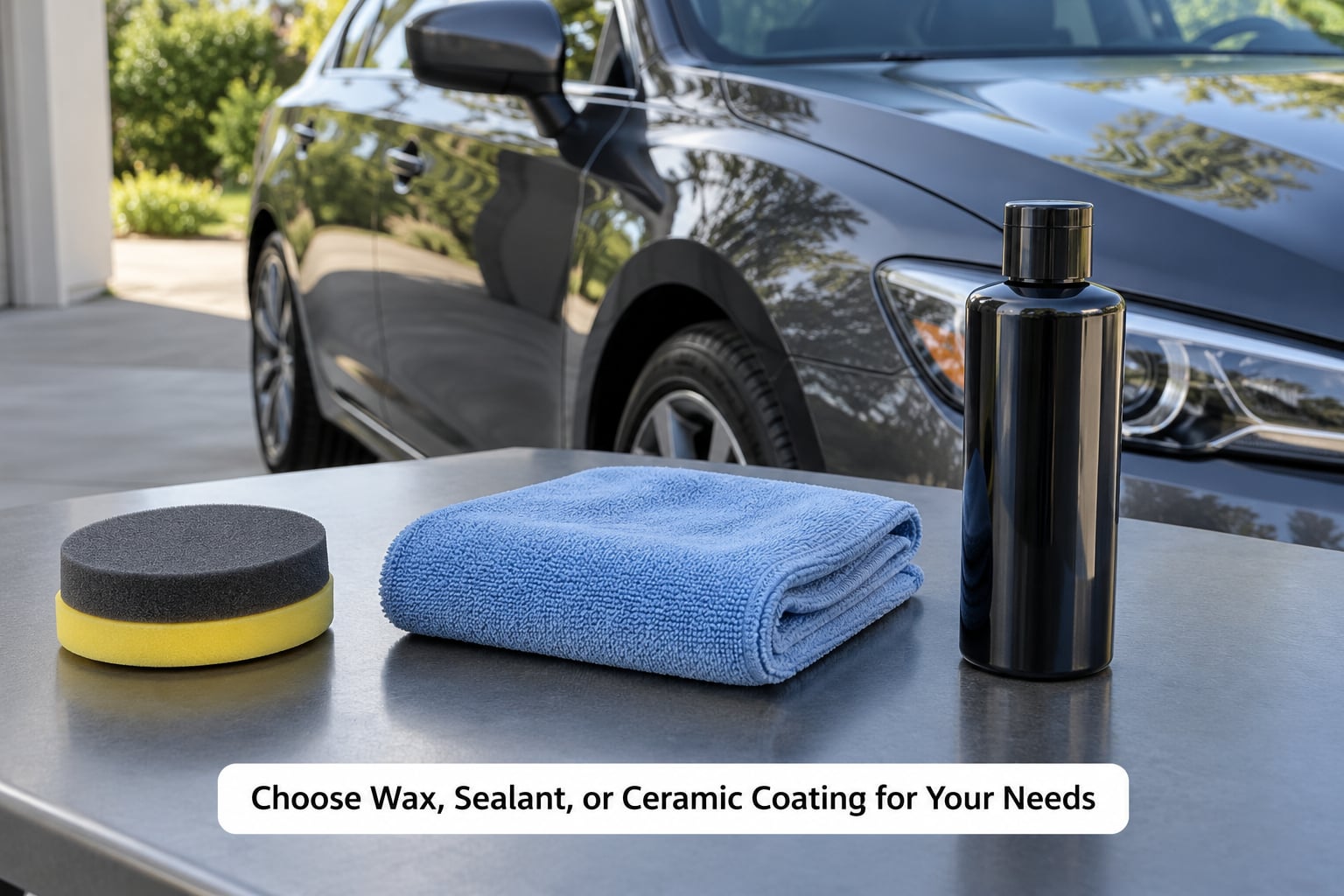
None of these layers stop sunlight from reaching the paint. What they do is absorb and reflect part of that energy, keep oxygen and grime off the clear, and make the surface hydrophobic so water and dirt rinse away instead of bonding.
- Car wax (carnauba or synthetic): slows fading and filters a little UV, but only for weeks to a few months. Easy to hand-buff at home.
- Paint sealant: holds gloss better than wax and resists grime for a few months. Still an easy hand job.
- Ceramic coating or spray sealant: the strongest gloss and gloss retention, lasting months for sprays and years for full coatings. Sprays go on at home; real coatings need a decontaminated, polished surface.
- Paint protection film: the only option that physically blocks UV, lasting years but installed by a professional, panel by panel or full car.
- Outdoor cover: blocks UV completely while it is on, and is easy to use badly. Put it on a clean car, in shade.
Read the label and follow it. Paint condition matters, some coatings need a machine polish or clay bar first, and applying to hot paint in direct sun is the fastest way to get hazy, uneven results that need stripping.
6. Apply Product to a Cool, Clean Panel
Work in shade on a panel that is cool to the touch, in the shade of your own body if that is all you have. Start at the top of the car and move down, so overspray and residue fall away from finished panels.
Use a thin layer. More product does not mean more protection, and thick residue turns into streaking that is harder to remove than a light coat. Follow the label’s cure and buff times exactly, panel by panel, rather than trying to do the whole car at once.
You will know it worked when the panel wipes clean without haze and water beads on the surface instead of sheeting flat. On a coated car, rinsing is easier and dirt comes off rather than needing a scrub.
7. Maintain the Protection and Act on Contamination Quickly
Set a maintenance rhythm from the product directions and from how exposed the car is. A car in open sun needs more frequent washing and reapplication than a garage-kept one, and a spray sealant is a top-up rather than a one-time job.
When something lands on hot paint, remove it fast. Bird droppings, tree sap, fuel spills, acidic cleaners, and bug splatter can etch clear coat in a matter of hours in the heat. Keep a quick-detail spray and a clean microfiber in the car for this reason alone.
Common Mistakes
- Washing a dusty car: rinse first, always. The fix is a bucket rinse before the mitt goes on.
- Using household cleaners: dish soap, laundry detergent, and acidic bathroom sprays strip oils and dull the finish. Use automotive shampoo only.
- Drying with old towels: cheap terry towels are where scratches come from. Rotate clean microfiber instead.
- Coating in direct heat: product flash-dries before you can spread it. Move to shade or wait for a cooler part of the day.
- Treating one panel as if it were the whole car: differences in film thickness and cure time cause a blotchy, mismatched finish. Slow down and match the spread.
- Reaching for an abrasive polish too early: aggressive compounding on paint that only needs decontamination removes clear coat you cannot get back.
- Expecting protection to reverse existing damage: no wax, sealant, or coating brings back peeled clear coat or deep pigment fade. It stops more damage and makes what remains look better.
- Forgetting the non-paint parts: headlights, taillights, tires, rubber seals, and unpainted plastic trim oxidize faster than the paint. Protect and clean them on the same schedule.
Frequently Asked Questions
Does sunlight damage car paint permanently?
Yes, and there is no way to undo it. Ultraviolet radiation and heat break down the clear coat in a process called photo-oxidation, which causes fading, gloss loss, a chalky haze, micro-cracks, and eventually peeling. Protection products slow that process and keep it cosmetic for longer. They do not reverse peeling clear coat or bring back pigment that has already faded.
Is wax or ceramic coating better for sun protection?
Both help, at different costs and effort levels. Wax and sealant are cheap, easy to apply, and need reapplying every few months. A ceramic coating lasts far longer and holds gloss better, but full coatings need a decontaminated, polished surface to bond properly. If you will not maintain either one consistently, the regular option you actually keep up with wins.
How often should I wash a car in hot, sunny weather?
More often than you think, because dirt, pollen, and fallout hold heat against the clear coat. Wash early in the morning or in the evening when the panels are cool, and dry promptly. If the car sits outside daily, a rinse every few days keeps contamination from baking in. Wash in direct midday sun only as a last resort.
Does a car cover protect paint from the sun?
It is the most complete UV protection available, since it removes exposure rather than slowing it. The risk is how it is used. Pulling a cover over a dusty car in direct light grinds that dust into the clear coat and causes swirl. Fit it to a freshly washed car, keep the inner surface soft and clean, and store it somewhere it will not collect grime.
Do dark-colored cars need more sun protection?
Dark paint shows sun damage sooner, and pigments like red and blue are among the first to fade visibly. Black absorbs more heat, so its surface runs hotter and the clear coat ages faster. White and silver pigments fade far less, though the clear coat over them still degrades the same way. Dark cars get the most benefit from consistent protection.
When should faded or oxidized car paint be repaired professionally?
When the clear coat has started to peel, craze with white micro-cracks, or flake. That is a body-shop job involving sanding, priming, and refinishing. Light oxidation and mild fading on intact clear coat can often be handled with a polish and a fresh layer of protection. A chalky surface that feels rough to the touch is a good signal to get a shop to inspect it.
Protect Your Paint Starting Today
Start with the free part: change where you park. Then fix the wash, since rinsing grit away before a mitt touches the panel protects the clear coat for free on every single wash.
After that, pick one protection product and commit to it rather than buying three and maintaining none. Wax or sealant for the car you will actually keep up with, a coating or film if you park outside daily and want the longer-term result, and a shade strategy in place either way.
If you take the time to learn how to protect car paint from sun damage now, it saves you a repaint later, and it protects resale value long before a mechanic would point at anything wrong.